The media as we
all know, has it’s own personal agenda. This is usually to provoke emotions
within society as well as to sell stories. There is no doubt that the media is
focusing on victims of crimes significantly more then it used to. The internet,
via social networking sites has made it even easier for journalists to go
deeper into the lives of people they wish to report on, providing them with
more information. Despte this however, there is still a disturbing and
significant amount of cases which go by completely unknown and unreported on.
Of course a newspaper is not able to report on all the events that occur in one
day. However it is important to consider how the media priorities what they do
report on. In order to do so, it is important to consider what makes an ‘ideal
victim’ within the eyes of the media.
Nils Christie (1986) considered the ‘ideal
victim’. They are described as ‘a person or category of individuals who, when
hit by crime, most readily are given the complete and legitimate status of
being a victim.’ Elderly women and young children may be suggested as typical
‘ideal victims’ whereas young men, the homeless, those with drug problems or
are existing on the margins of society, will not as easily achieve legitimate
victim status.
A typical ‘ideal victim’ will having the
following attributes:
·
Vulnerability or weakness
·
Were carrying out a respectably
activity when the crime occurred, or minding their own business
·
Their own actions could not be
blamed, innocence
·
The offender was at an
advantage, typically ‘bad’
·
The offender was unknown to the
victim
·
Worthy of sympathy &
compassion
It is said that a ‘hierarchy of
victimization’ may exist as it is portrayed and reinforced within the media.
This describes almost a pecking order that portrays the differential status and
categories of crime victims within the media or even official discources. Ideal
victims, such as children, are at the top whereas non-deserving victims, such
as drunks, are at the bottom. There are those who acquire an ‘ideal victim’
status which then attract mass levels of media attention. These people are able
to generate collective mourning on a near global scale and even generate
significant change to social and criminal justice policy and practice (Greer,
2004; Valier, 2004). On the other hand, there are individuals and crime victims
who never acquire legitimate victim status or perceived as ‘undeserving
victims’ will receive little to no media attention and therefore pass unnoticed
within the wider social world.
The reason the
media utilizes criteria in order to selectively report on certain situations
and circumstances is because such criterion keeps a story simple. It is much
easily grasped my the media as there are clear cut set of events which can only
be interpreted in one way. For instance, the victim was good and did not
deserve what happened to them. Whereas the offender was clearly bad or a
horrible individual and there is no room for grey areas. The crimes that are
hardly reported on are usually because they are not one-dimensional. The media
then decides that a certain victim does not ‘appeal’ to their readership.
The attribution or reason an ideal victim
status & related levels of media interest are also clearly influenced by
demographic characteristics (Greer 2;23). Such charateristics include class,
gender, age, sexuality, race and even ‘respectability’. There are many examples where the media has
selectively reported on similar incidents however reporting more on one instead
of the other or equally. This is evident during the media speculation for a
missing 13 year old, Milly Dowler. When a body was found, it was suspected to
be Milly however it was identified as 14 year old Hannah Williams, who had also
gone missing around the same time. The news about Hannah was almost forgotten
immediately. This was because she did not fit in with the concept of an ‘ideal
victim’ as she came from the working class, and was raised by a single mother
on low income. By contrast, Milly’s story was ongong as she was epitomized as
an ‘ideal victim’. Hannah’s story generated just over 60 articles in the
British National Press, mostly after she was found. This was in great contrast
to Milly’s, which produced 100s (Fracassini, 2002).
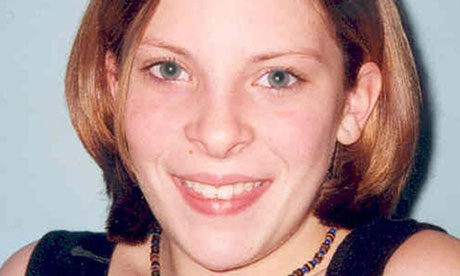
Milly Dowler
These demographic characteristics may or
may not determine news media interest however it is not always straightforward.
‘The influence of these demographics needs to be considered within the wider
context of the news production process, the other elements of the case, and the
prevailing cultural and political environment at that time’ (Greer 2;24).
Therefore, in order to completely understand the complexity of which victims
are picked up by the media, it is necessary to also take the concept of
newsworthiness into consideration.
References:
Christie, N. 1986, In Fattah, E. (ed.) From
Crime Policy to Victim Policy: Reorienting the Justice System, London:
Macmillan, p.18.
Fracassini, C. 2002, ‘Missing’, Scotland on
Sunday, 18 August.
Greer, C. 2004 ‘Crime, media and community:
grief and virtual engagement in late modernity’,in J. Ferrell, K. Hayward, W.
Morrison and M. Presdee (eds), Cultural Criminology Unleashed, London:
Cavendish.
Greer C. 2007, ‘News media, victims and
crime’, Sagepub, vol. 1, viewed 7 May
2014, <http://www.sagepub.com/upm-data/15712_02_Greer_Ch_02.pdf>.
Phillips N. 2011, ‘The media and the ‘ideal
victim’’, Forty Shades of Grey Blogspot,
United Kingdom, viewed 7 May 2014, <http://fortyshadesofgrey.blogspot.com.au/2011/01/media-and-ideal-victim.html>.

A good discussion on victims in the media. I think it would have been nice to condense some of the discussion and/or draw in some current examples to show how this is being played out in today's media too.
ReplyDeleteAlyce