Offenders in the
media are usually always portrayed as bad criminals that have willing committed
a crime or a wrong doing. There are great misrepresentations of offenders in
the media. There is a range of perspectives that may be taken into
consideration when discussing the offenders within the media. The media however
enjoys to make stereotypical portrayals about criminals.
There are a
variety of criminal portrays that have now become quite stereotypical and well
known. Surette (2002: 67-68) takes into account three main criminals which are
now standardized by the media. They include the predatory criminal, the
professional criminal or the heroic criminal.
The media enjoys
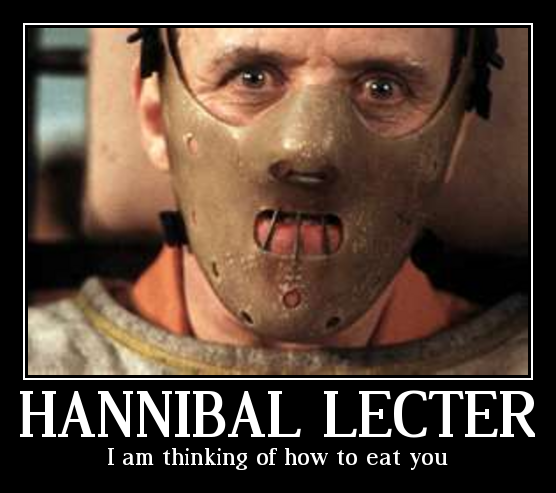
representing the predatory criminal. These types of criminals may be described
as interpersonal as they randomly choose their helpless victim that tends to be
an innocent stranger (Surette, 2002). These types of criminals are more
animalistic, irrational and ofcourse, depicted as predators. There crimes are
more violent, senseless & sensational. This may be evident in film
characters such as Hannibal Lecter, known as ‘Hannibal the Cannibal’. These
criminals may be portrayed in a sensationalized manor as they instill a fear of
crime. They may not have a particular reason for crime, other then twisted
revenge or irrational violence. There may be theoretical underpinnings such as
individual explanations. They are normally limited to certain individuals &
may include biological or psychological explanations.
A secondary
criminal portrayal includes the business & professional criminals, also
known as those that commit white-collar crime. This relates to the types of
crime which occur in an office or other professional environment. They are
normally depicted as ruthless, determined and usually money hungry or a ladies’
man. Their crime is a form of work or business to them and possibly what they
do for a living. Theoretical underpinnings may also include individual or
psychological explanations. This type of criminal usually engages in such
crimes such as fraud, money laundering and so on. A recent example of a
business or professional criminal would be Jordan Belfort’s depiction in Wolf of
Wall Street. A stockbroker who involved in criminal activities such as fraud
within the stock market and clearly depicted as ruthless, money-hungry & as
a ladies’ man within the film.

The third
criminal portrayal within the media may also the heroic criminals. These
criminals may commit crimes such as murder, theft, terrorism, vandalism and so
on, yet are depicted to save the day. There reasons for crime may be political
or sociological revenge or to fight back, as well as defence. Theoretical
underpinnings include the strain/blocked opportunities. It may also include the
labeling theory. Robin Hood may be an example as they use the excuse that the
law is corrupt and oppressive. Due to this, they have no choice but to steal in
order for them to survive or to save others. Other examples may include other
superheroes in general.
An interesting
case or portrayal to consider within the media would be the show Dexter. Dexter
may be portrayed as predatory criminal but also as a heroic criminal. He is a
serial killer which commits animalistic crimes to people he does not personally
know well. However, could he also be considered a heroic criminal? One that
commits crime such as murder, to other criminals.

Beyond these
stereotypical portrayals of criminals, there are also falsifications within
news reporting media. When society thinks of a criminal, their minds will
usually jump to conclusions of either youths, minorities or people from a
different ethnicity. This is because there is a great deal of overrepresentation
of young, ethnic minority suspects. This is in fact false, as offenders in
fiction, tend to be of a primarily higher status, white and usually middle aged
males. Racial typification of crime is common as the media over represents
minorities as offenders on television as compared to their white counterparts.
There is also a criminal typification of race, this occurs when a particular
race is dominated by criminal figures.
Refernces:
Surette 2002: 67-68, ‘Lecture 8: Victims
and Offenders in the Media’, UNSW Media, Crime and Politics, UNSW, Sydney
<
http://moodle.telt.unsw.edu.au/mod/resource/view.php?id=343171>

A good overview. Would have liked to see you engage more directly with the academic literature, rather than just using the course lecture slides. This could have allowed you to present a more nuanced reading of the types of offenders and the implications of these representations.
ReplyDeleteAlyce