Thursday, June 5, 2014

Offenders in the Media


Offenders in the media are usually always portrayed as bad criminals that have willing committed a crime or a wrong doing. There are great misrepresentations of offenders in the media. There is a range of perspectives that may be taken into consideration when discussing the offenders within the media. The media however enjoys to make stereotypical portrayals about criminals.

There are a variety of criminal portrays that have now become quite stereotypical and well known. Surette (2002: 67-68) takes into account three main criminals which are now standardized by the media. They include the predatory criminal, the professional criminal or the heroic criminal.

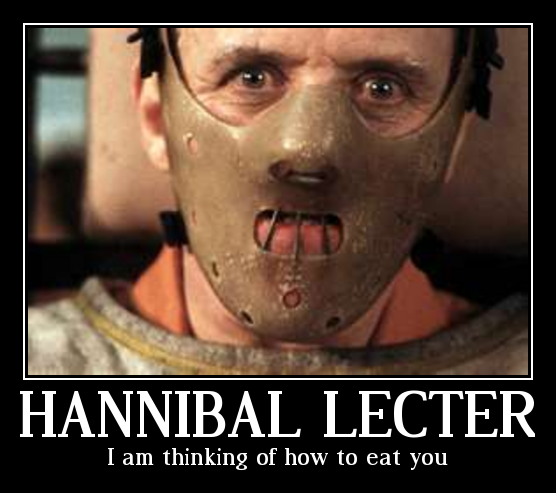
The media enjoys representing the predatory criminal. These types of criminals may be described as interpersonal as they randomly choose their helpless victim that tends to be an innocent stranger (Surette, 2002). These types of criminals are more animalistic, irrational and ofcourse, depicted as predators. There crimes are more violent, senseless & sensational. This may be evident in film characters such as Hannibal Lecter, known as ‘Hannibal the Cannibal’. These criminals may be portrayed in a sensationalized manor as they instill a fear of crime. They may not have a particular reason for crime, other then twisted revenge or irrational violence. There may be theoretical underpinnings such as individual explanations. They are normally limited to certain individuals & may include biological or psychological explanations.


A secondary criminal portrayal includes the business & professional criminals, also known as those that commit white-collar crime. This relates to the types of crime which occur in an office or other professional environment. They are normally depicted as ruthless, determined and usually money hungry or a ladies’ man. Their crime is a form of work or business to them and possibly what they do for a living. Theoretical underpinnings may also include individual or psychological explanations. This type of criminal usually engages in such crimes such as fraud, money laundering and so on. A recent example of a business or professional criminal would be Jordan Belfort’s depiction in Wolf of Wall Street. A stockbroker who involved in criminal activities such as fraud within the stock market and clearly depicted as ruthless, money-hungry & as a ladies’ man within the film.



The third criminal portrayal within the media may also the heroic criminals. These criminals may commit crimes such as murder, theft, terrorism, vandalism and so on, yet are depicted to save the day. There reasons for crime may be political or sociological revenge or to fight back, as well as defence. Theoretical underpinnings include the strain/blocked opportunities. It may also include the labeling theory. Robin Hood may be an example as they use the excuse that the law is corrupt and oppressive. Due to this, they have no choice but to steal in order for them to survive or to save others. Other examples may include other superheroes in general. 


An interesting case or portrayal to consider within the media would be the show Dexter. Dexter may be portrayed as predatory criminal but also as a heroic criminal. He is a serial killer which commits animalistic crimes to people he does not personally know well. However, could he also be considered a heroic criminal? One that commits crime such as murder, to other criminals.


Beyond these stereotypical portrayals of criminals, there are also falsifications within news reporting media. When society thinks of a criminal, their minds will usually jump to conclusions of either youths, minorities or people from a different ethnicity. This is because there is a great deal of overrepresentation of young, ethnic minority suspects. This is in fact false, as offenders in fiction, tend to be of a primarily higher status, white and usually middle aged males. Racial typification of crime is common as the media over represents minorities as offenders on television as compared to their white counterparts. There is also a criminal typification of race, this occurs when a particular race is dominated by criminal figures.

Refernces:

Surette 2002: 67-68, ‘Lecture 8: Victims and Offenders in the Media’, UNSW Media, Crime and Politics, UNSW, Sydney
< http://moodle.telt.unsw.edu.au/mod/resource/view.php?id=343171>

Victims of The Media


The media as we all know, has it’s own personal agenda. This is usually to provoke emotions within society as well as to sell stories. There is no doubt that the media is focusing on victims of crimes significantly more then it used to. The internet, via social networking sites has made it even easier for journalists to go deeper into the lives of people they wish to report on, providing them with more information. Despte this however, there is still a disturbing and significant amount of cases which go by completely unknown and unreported on. Of course a newspaper is not able to report on all the events that occur in one day. However it is important to consider how the media priorities what they do report on. In order to do so, it is important to consider what makes an ‘ideal victim’ within the eyes of the media.

Nils Christie (1986) considered the ‘ideal victim’. They are described as ‘a person or category of individuals who, when hit by crime, most readily are given the complete and legitimate status of being a victim.’ Elderly women and young children may be suggested as typical ‘ideal victims’ whereas young men, the homeless, those with drug problems or are existing on the margins of society, will not as easily achieve legitimate victim status.

A typical ‘ideal victim’ will having the following attributes:

·      Vulnerability or weakness
·      Were carrying out a respectably activity when the crime occurred, or minding their own business
·      Their own actions could not be blamed, innocence
·      The offender was at an advantage, typically ‘bad’
·      The offender was unknown to the victim
·      Worthy of sympathy & compassion

It is said that a ‘hierarchy of victimization’ may exist as it is portrayed and reinforced within the media. This describes almost a pecking order that portrays the differential status and categories of crime victims within the media or even official discources. Ideal victims, such as children, are at the top whereas non-deserving victims, such as drunks, are at the bottom. There are those who acquire an ‘ideal victim’ status which then attract mass levels of media attention. These people are able to generate collective mourning on a near global scale and even generate significant change to social and criminal justice policy and practice (Greer, 2004; Valier, 2004). On the other hand, there are individuals and crime victims who never acquire legitimate victim status or perceived as ‘undeserving victims’ will receive little to no media attention and therefore pass unnoticed within the wider social world.

The reason the media utilizes criteria in order to selectively report on certain situations and circumstances is because such criterion keeps a story simple. It is much easily grasped my the media as there are clear cut set of events which can only be interpreted in one way. For instance, the victim was good and did not deserve what happened to them. Whereas the offender was clearly bad or a horrible individual and there is no room for grey areas. The crimes that are hardly reported on are usually because they are not one-dimensional. The media then decides that a certain victim does not ‘appeal’ to their readership.

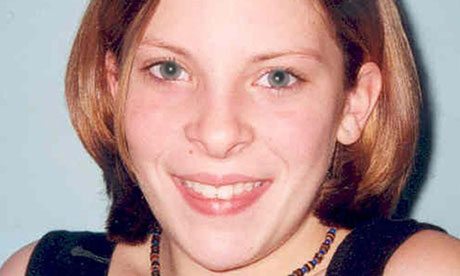
The attribution or reason an ideal victim status & related levels of media interest are also clearly influenced by demographic characteristics (Greer 2;23). Such charateristics include class, gender, age, sexuality, race and even ‘respectability’. There are many examples where the media has selectively reported on similar incidents however reporting more on one instead of the other or equally. This is evident during the media speculation for a missing 13 year old, Milly Dowler. When a body was found, it was suspected to be Milly however it was identified as 14 year old Hannah Williams, who had also gone missing around the same time. The news about Hannah was almost forgotten immediately. This was because she did not fit in with the concept of an ‘ideal victim’ as she came from the working class, and was raised by a single mother on low income. By contrast, Milly’s story was ongong as she was epitomized as an ‘ideal victim’. Hannah’s story generated just over 60 articles in the British National Press, mostly after she was found. This was in great contrast to Milly’s, which produced 100s (Fracassini, 2002).

Milly Dowler


These demographic characteristics may or may not determine news media interest however it is not always straightforward. ‘The influence of these demographics needs to be considered within the wider context of the news production process, the other elements of the case, and the prevailing cultural and political environment at that time’ (Greer 2;24). Therefore, in order to completely understand the complexity of which victims are picked up by the media, it is necessary to also take the concept of newsworthiness into consideration.

References:

Christie, N. 1986, In Fattah, E. (ed.) From Crime Policy to Victim Policy: Reorienting the Justice System, London: Macmillan, p.18.

Fracassini, C. 2002, ‘Missing’, Scotland on Sunday, 18 August.

Greer, C. 2004 ‘Crime, media and community: grief and virtual engagement in late modernity’,in J. Ferrell, K. Hayward, W. Morrison and M. Presdee (eds), Cultural Criminology Unleashed, London: Cavendish.


Greer C. 2007, ‘News media, victims and crime’, Sagepub, vol. 1, viewed 7 May 2014, <http://www.sagepub.com/upm-data/15712_02_Greer_Ch_02.pdf>.

Phillips N. 2011, ‘The media and the ‘ideal victim’’, Forty Shades of Grey Blogspot, United Kingdom, viewed 7 May 2014, <http://fortyshadesofgrey.blogspot.com.au/2011/01/media-and-ideal-victim.html>.

How prominent is Murderabilia?


Murderabilia is now a term used to describe situations where people collect items that are related to murders, murderers or even violent crimes in general. It includes items associated with ‘notorious or infamous’ crimes and criminals (Chang 2004:435). It was a term coined by Andy Kahan. The fact that this is now a coined term, may be an indication of its increasing prevalence. There may be buyers that seek collectibles in the form of artifacts used or owned by murderers. This may be because many believe these items offer power & control. People may also just be genuinely interested or the fact that it provides a subversive image. Collectibles include a variety of marketable items which range from vehicles, houses, crime weapons, clothing, art by the killer or even locks of hair, blood or fingernail clippings. These items sell for ridiculous amounts of money, for instance, a lock of Charles Manson’s hair sells for $2500. As the most notorious crimes tend to be serial murders, there is usually more hype around serial killers. The fact that there is now an industry around serial killers, is simultaneously evidence of and a contributor to the modern obsession with serial murder (Jarvis 2007: 328).

Murderabilia results in the celebritisation of serial killers. The sale of their items, or other crime scene items glorifies both the killer and the act of killing. It also gives them a continued prominence with society and almost validates a persons wrong-doing. In some cases, the killer benefits from the sales of murderabilia if it is in relation to their murders. These murderers then earn money whilst in prison or in some cases, receive gifts off their sellers or ‘fans’. In order for those imprisoned to make money within prison, they may complete artworks due to having time on their hands and wanting to express themselves. These killers may have someone on the outside who serve as the prisoners’ sales agent who also reap financial rewards for selling the merchandise to the public. The fact that there are people who get involved and are considered ‘sales agents’ further proves how prominent murderabilia is.

Murderabilia items first became controversial in 2001 when eBay had banned the sale of such items, which forced the industry to go underground. However this hardly managed to stop sales within this new market. It even lead sellers & collectors to private websites which were dedicated to selling true crime collectables. Despite eBay banning the sale of murderabilia, most sellers have moved onto Facebook. Facebook has actually allowed the continuation of sales of Murderabilia. A facebook spokesperson stated that ‘While some content may be vulgar and distasteful, distasteful content on its own does not violate our policy.’ Facebook allowing the promotion, continuation and the selling of murderabilia may be considered surprising as people have been allowed to market murder on a free social-media website. Business pages associated with murderabilia include Supernaught, Murder Auction, Dark Vomit, Redrum’s Autographs and Serial Killers Ink. These sellers also post crime-scene photos for all to see. Serial Killer’s Ink for instance, posted an image of serial-killer John Robinson’s decaying victims with a caption that read ‘Enjoy!’ This type of insensitivity to victims & their families is also highly controversial.

Murderabilia collectors may become involved due to being fascinated by murder and crime. Some people believe that an item previously possessed by an infamous killer may hold power. It is almost like a talisman effect. People may even think their possession of such an item provides them with protection. It may also provide an adrenaline rush for collectors, similarly produced when on a roller coaster ride. Paul Duffy of ‘Wholesale Murder’ and www.deathmerchant.net states that he is particularly interested in what makes someone snap & commit murder. He even states that he considers inmates as his friends. ‘I see how normal they are, how much I have in common with them, even though they killed nine people, maybe 10. I believe that me, you, everybody has a killer instinct in them, and if you get pushed around or wronged, you hit a snapping point.’ People may also become interested because it’s taboo and morbid.

Murderabilia has now been well established as a thriving business making ridiculous amounts of money on ridiculous items related to serial killers. It’s prominence is undeniable with the number of companies that are thriving. The fact that Facebook also allows for businesses on a well known social media platform seems to make the collection of murderabilia even more acceptable and prominent.

References:

Bonn S. 2014, ‘The strange hobby of collecting murderabilia’, Psychology Today, 24 January, viewed 10 April 2014
<http://www.psychologytoday.com/blog/wicked-deeds/201401/the-strange-hobby-collecting-murderabilia>.

Chang, S. 2004. ‘Prodigal son returns: An assessment of current Son of Sam laws and the reality of the online murderabilia marketplace.’ Rutgers Computer and Technology Law Journal, 31; 435. Viewed 10 April 2014


DiFilippo D. 2013, ‘Chester County man sells ‘muderabilia’’, Philly News, 24 May, viewed 10 April 2014, <http://articles.philly.com/2013-05-24/news/39504668_1_facebook-page-facebook-spokeswoman-murderabilia>.

Dimond D. 2013, ‘Murderabilia Re- Dux - Now Facebook Joins the Craze’, Huffington Post, 8 January, viewed 10 April 2014,
<http://www.huffingtonpost.com/diane-dimond/murderabilia_b_3685580.html>.

Jarvix, B. 2007. ‘Monsters Inc.: Serial Killers and Consumer Culture’ Crime, Media, Culture 3(3), 328

Crime Shows & Their Influence


People’s opinions about crime & the criminal justice system are in a way, shaped by the indirect information they consume by the media. Television may be considered to be a powerful medium that is able to educate and entertain masses. There are a variety of crime shows that may range from purely fictional, crime news to even reality television these days. Some programs may be considered both entertaining & informative as they are now referred to as ‘infotainment’. It has now been suggested that the content within these programs may influence people’s perceptions towards crime and the criminal justice system. They may either provoke fear or even glamorize crime.

The fact that people within society do not have direct or regular experiences of crime, leaves them to depend on other sources for such information. This leads to people coming to their own conclusions or misconceptions about crime which is greatly portrayed through film and television. Television both increases and reduces the fear of crime. It is likely someone will fear crime after watching a crime-related program however someone else’s fear of crime will reduce after watching a culprit being caught & sentenced.

Those that also watch crime-related television, in particular crime dramas such as CSI etc., are more likely to ‘overestimate the frequency of serious crimes.’ (Sparks, Purdue University study) It was also found that ‘Heavy TV-crime viewers estimated 2 and a half more times more real-world deaths due to murder then non-viewers.’ This is because crime shows usually show death as a result of murder. This greatly affects people’s perceptions of crime and its frequency within the real world.

A possible result of heavy reliance on television shows and mass media can lead to ‘mean world syndrome’. A term coined by Geoge Gerbner to describe a phenomenon whereby violent related content within mass media makes viewers believe the world is an intimidating and dangerous place. It has been found that there is a direct correlation between the amount of television one watches and the amount of fear one harbors about the world.’

There is also the CSI effect, where there has been an exaggerated portrayal of forensic science on crime shows which then influences public perfection. This is evident when jurors demand more forensic evidence in criminal trials. As a result, they raise the effective standard of proof for prosecutors. This ‘effect’ is not completely proven however frequent crime show or CSI viewers, may place lower value on circumstantial evidence. Furthermore, public awareness about forensic science has been increased, as well as the demand for forensic evidence by police investigators. Not only this, forensic may also teach criminals how to conceal evidence and therefore makes it even more difficult for investigators to solve cases.

Crime shows may also negatively influence society by glamorizing and glorifying crime. This then leads to an increase in crime as it has been said the audience is encouraged and influenced by what they see on television. Copy-cat situations may also be encouraged. Shows such as Underbelly and Breaking Bad have been critized for glorifying and even increasing crime rates. Underbelly has been accused of turning gangsters into cult stars and glorifying dangerous killers that are even profiting from their crimes. Peter Rolfe highlights another problem with this situation by stating that ‘..With a series like Underbelly is that there is no thought for the victims or their families.’


‘Breaking Bad’ is another example which contains criminal activities. It has been said to normalize the use and idea of meth, something people previously may not have been familiar with. The show has now been said to influence the real-life meth trade as the use & trade of methamphetamines are increasing. Blake Edwing states that ‘When a critically acclaimed television show centered on the drug world so permeates popular culture that is becomes the subject of water cooler talk and Jimmy Fallon parodies, there can be little doubt that some people on the margins of society (teenagers, young adults, low income, poverty, etc.) will be drawn to that world, if only out of morbid curiosity.’


The extent that people get caught up with television is astounding, it greatly impacts people’s perceptions of crime, the criminal justice system or even our views on the world. It will also give people a false sense of the use of something such as forensic science or even lead to increases in crime by glorifying it.


References:

Benns M. 2008, ‘Glorifying gangsters a crime, say critics’, Sydney Morning Herald, 1 June, viewed 19 May 2014, <http://www.smh.com.au/news/national/glorifying-gangsters-a-crime-say-critics/2008/05/31/1211654371079.html>.

Kort-Butler L., Sittner Hartshorn K. 2011, Crime dramas influence societies view of crime, FYI Living, viewed 19 May 2014, <http://fyiliving.com/research/crime-dramas-influence-societies-view-of-crime/>.
                                        
Kort-Butler L., Sittner Hartshorn K. 2011, ‘Watching the detectives: crime programming, fear of crime, and attitudes about the criminal justice system’, vol. 52, viewed 19 May 2014, <http://www.ncbi.nlm.nih.gov/pubmed/21337735>.

Lilly K. 2009, ‘TV’s crime dramas affecting reality’, Pharos-Tribune, 28 November, viewed 19 May 2014, <http://www.pharostribune.com/local/x546238808/TV-s-crime-dramas-affecting-reality>.

Miller J. 2006, ‘George Gebner leaves the mean world syndrome’, Peace, Earth and Justice News, 8 January, viewed 19 May 2014, <http://pejnews.com/index.php?option=com_content&view=article&id=4053>.

RMN Global Research 2013, Is Breaking Bad a bad influence on society by mainstreaming meth?, viewed 19 May 2014, <http://rmnglobalsearch.com/breaking-bad/>.